

How a mother of four uncovered dark matter and opened the universe to women in science.
Vera Rubin was never meant to map the universe—or so the world told her. Princeton wouldn’t even let her apply to its graduate program because she was a woman. Colleagues doubted her, institutions dismissed her, and society expected her to trade telescopes for a typewriter once she became a mother of four.
Instead, Rubin rewrote the cosmos. Her groundbreaking discovery of dark matter not only reshaped astronomy, it cracked open the door for generations of women to follow her into science.
She was a trailblazing astronomer whose work transformed our understanding of the universe. Her discovery of dark matter revealed that most of the cosmos is invisible, reshaping modern physics and astronomy. Beyond her science, Vera Rubin broke barriers for women in a field that often tried to shut them out—a story that begins with her early life.
Early Life and Education
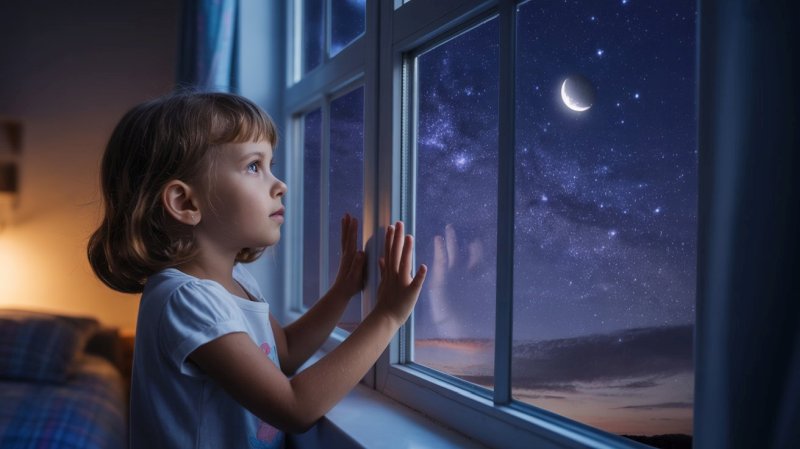
As a child, Vera Rubin would press her face to the window of her family’s home in Washington, D.C., and wonder why the stars seemed to move across the night sky. While other children might have turned their attention back to toys or bedtime stories, Vera’s questions grew bolder: Why are galaxies where they are? What else is out there? That quiet curiosity soon became the foundation of her life’s work.
Source: Author
Her passion led her to Vassar College, one of the few places where women were encouraged to pursue science. There, she earned her astronomy degree and dreamed of continuing her studies at the highest level. Princeton University seemed like the obvious next step—until her application packet was returned unopened. The university simply did not admit women into its graduate astronomy program.
The rejection was crushing, but not defeating. Vera pressed forward, completing her master’s degree at Cornell and then a doctorate at Georgetown University. Still, the message from the academic world was clear: her brilliance was unwelcome, not because of her ideas, but because of her gender. Each lecture, each exam, and each research project came with the added burden of proving she belonged in a field that insisted she did not.

Source: https://www.freepik.com/free-photo/fantasy-astral-wallpaper-composition_39425680.htm#fromView=search&page=3&position=26&uuid=2fc327c2-e875-44d3-9960-b8beb3b393d8&query=+a+person+looking+night+sky%2C+seeing+%E2%80%9Cgalaxy%E2%80%9D
Scientific Career and Major Contributions
When Vera Rubin finally secured her place at the telescope, she did more than observe the stars—she rewrote our understanding of the universe. Teaming up with astronomer Kent Ford, who had developed a powerful new spectrometer, Rubin set out to measure how stars moved within spiral galaxies.
The results were shocking. Stars in the outermost reaches of galaxies weren’t slowing down as expected. Instead, they were moving just as quickly as those near the center. The visible mass wasn’t enough to hold them in place—something unseen was at work.
Rubin put it plainly: “What you see in a spiral galaxy is not what you get.” Her measurements revealed that galaxies contained about ten times more dark matter than visible matter. At least 90% of the universe, she argued, was invisible.
She often reflected on the scale of what she had uncovered: “In a spiral galaxy, the ratio of dark-to-light matter is about a factor of ten. That’s probably a good number for the ratio of our ignorance-to-knowledge. We’re out of kindergarten, but only in about third grade.”
Though many astronomers resisted at first, her evidence was too clear to dismiss. Rubin’s work transformed cosmology, turning dark matter into one of the greatest scientific mysteries of the modern age.
Read Also: The Story of a First Female Professor Laura Bassi: What a historic milestone she achieved
Overcoming Barriers as a Woman in Science
Vera Rubin’s career was a constant battle against the expectations of her time. Many institutions doubted her abilities simply because she was a woman, and colleagues often questioned whether she belonged in astronomy at all.
She faced outright rejection early on, like Princeton’s refusal to admit her to graduate studies. Even later, she sometimes found herself the only woman in a room full of male astronomers. Yet she refused to let prejudice define her path.
Balancing her work with raising four children added another layer of challenge. Rubin often brought her children to observatories, turning stargazing trips into lessons for both science and life. Her home was a laboratory of curiosity, proving that motherhood and a groundbreaking scientific career could coexist.
Through persistence, excellence, and quiet determination, Rubin carved out a space not only for herself but for generations of women who would follow. She showed that brilliance and resilience could break barriers, even in the most exclusive corners of science.
Read Also: The woman from Mars – a Fascinating Story by a Slovak Astrobiologist
Legacy Beyond Astronomy
Vera Rubin’s discoveries changed science forever, but her influence reached far beyond the stars. She became a mentor to young scientists, especially women who struggled to find a place in academia. Her message was simple but powerful: there is no reason women cannot do science as well as men.
Her advocacy resonated. Rubin spoke openly about inequality in research institutions, reminding colleagues that brilliance knows no gender. She fought to have women hired in observatories, cited in journals, and invited to conferences.
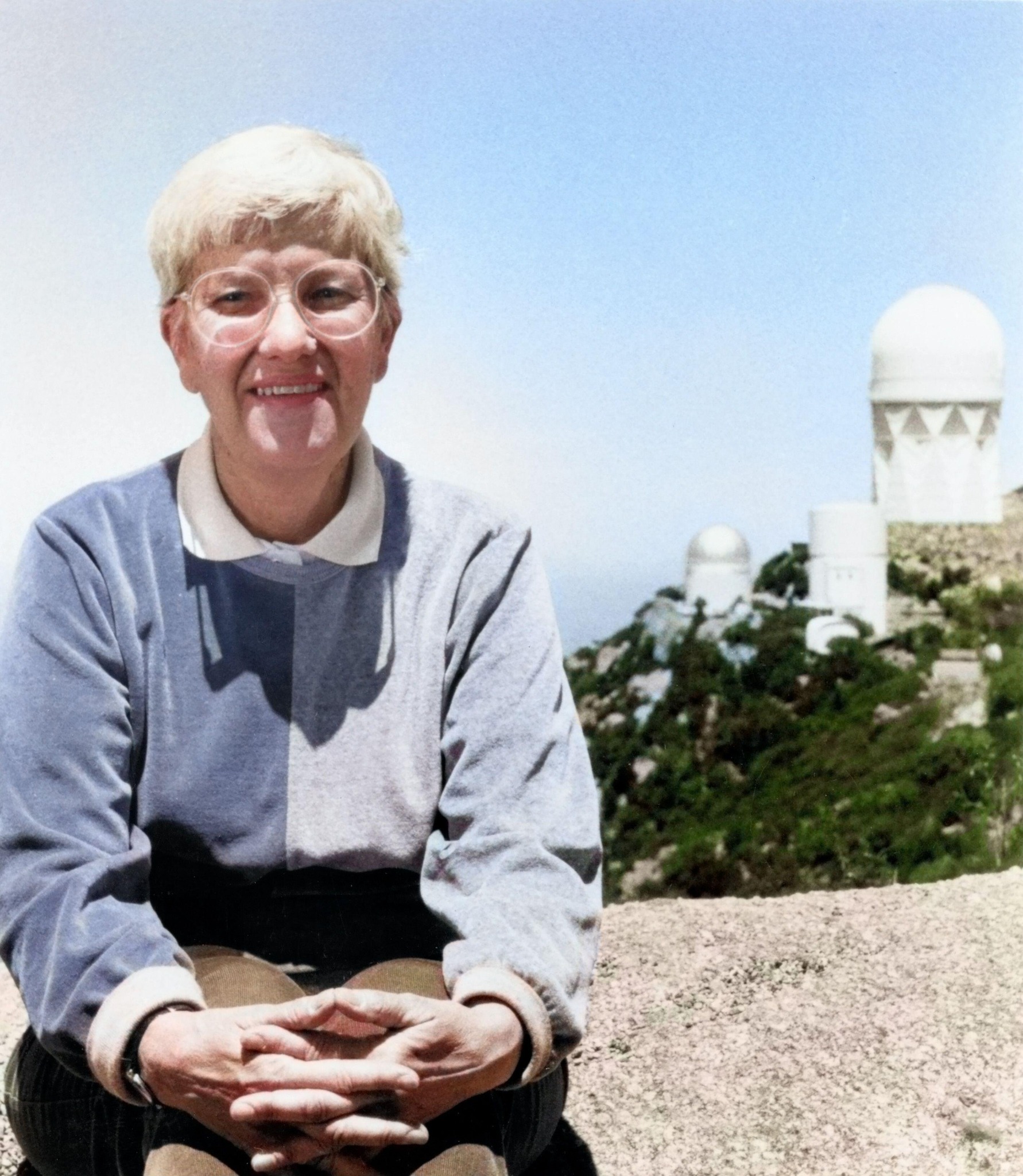
Today, her name lives on not only in textbooks but also in the Vera C. Rubin Observatory in Chile—a groundbreaking facility dedicated to mapping the night sky. It stands as a tribute to a woman who refused to be invisible, just like the dark matter she revealed to the world.
Source: https://www.facebook.com/secretsofuniverse/posts/the-woman-who-proved-most-of-the-universe-is-missingtbt-throwbackthursday-this-p/1289862362787362/
Influence on Future Generations
Rubin’s life became a blueprint for countless young women who wanted to follow their curiosity into science. She showed that it was possible to balance family with discovery, that persistence could outshine prejudice, and that the universe itself is richer when more voices are included in the search.
Rubin’s children all became scientists, a reflection of the curiosity that infused her family life. But her reach went much further. Generations of young women cite her as the reason they dared to imagine themselves as astronomers or physicists.
Even as she celebrated her discoveries, Rubin’s gaze was always forward: “We have peered into a new world, and have seen that it is more mysterious and more complex than we had imagined. Still more mysteries of the universe remain hidden. Their discovery awaits the adventurous scientists of the future. I like it this way.”
Vera Rubin didn’t just uncover the hidden matter of the universe—she uncovered hidden possibilities for women in science. Her life proved that brilliance can thrive even in the face of rejection, and that determination can reshape both the cosmos and society.