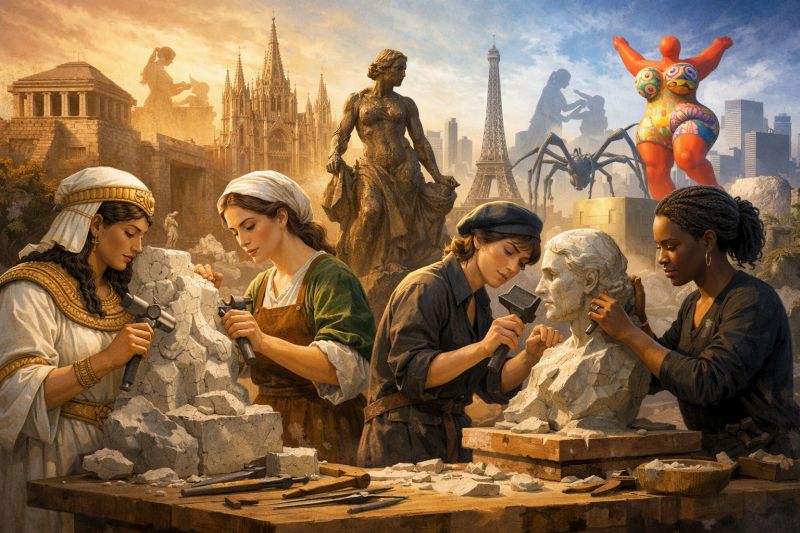

Before their names appeared in textbooks, before galleries placed their work on pedestals, and long before recognition caught up — female sculptors were already shaping the art world.
Some worked in silence, their contributions absorbed into workshops led by men. Others fought for visibility, carving their place into history as boldly as they carved stone, wood, or metal. From ancient civilizations to contemporary installations, their work reflects not only artistic mastery, but persistence, identity, and quiet rebellion.
This is not just a story of art. It is a story of reinvention, resilience, and late recognition — themes that still resonate with women building careers, businesses, and creative paths today.
In this curated journey, we move across centuries to rediscover the female sculptors who refused to remain invisible — and in doing so, reshaped the world around them.
Before Recognition: The First Female Sculptors in History
Long before galleries, awards, or recognition, female sculptors were already part of the story — even if history rarely wrote their names down.
In many cases, their work was hidden behind workshops, families, or institutions. And yet, traces remain. Enough to tell a powerful story of presence, persistence, and quiet influence.
Enheduanna: The First Known Female Voice of Art
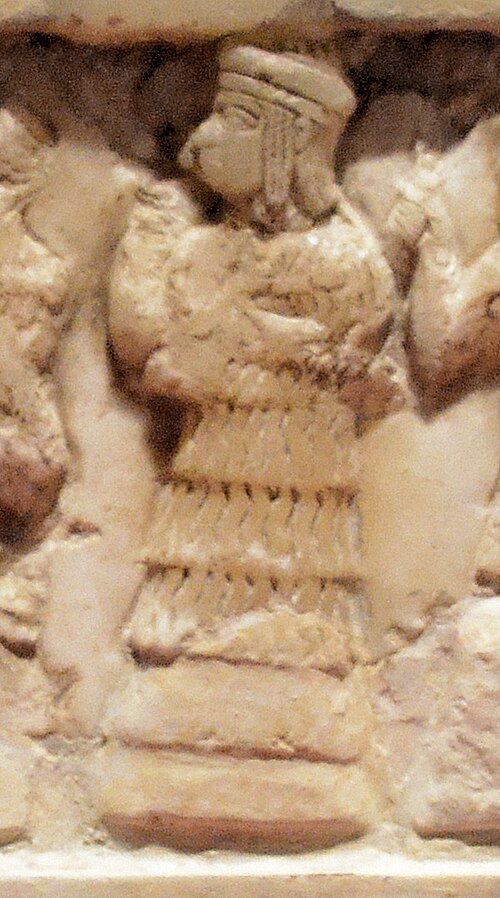
In ancient Mesopotamia, around 2300 BCE, Enheduanna stood at the intersection of power, culture, and creativity.
Known as the world’s first recorded author, she was also deeply connected to temple life — a space where sculpture, reliefs, and visual storytelling shaped spiritual experience. While we cannot point to a single sculpture and assign her name to it, her influence over artistic expression is undeniable.
Her legacy reminds us that female sculptors — and female creators — existed long before they were formally recognized.
Sabina von Steinbach: A Name Carved Into Stone
Centuries later, in medieval Europe, a woman’s name appears — rare, almost unexpected.
Sabina von Steinbach is associated with the sculptures of Strasbourg Cathedral, one of the most important Gothic landmarks of its time. Believed to be the daughter of master builder Erwin von Steinbach, she is often credited with sculptural figures such as Ecclesia and Synagoga.
Whether fully documented or partly legendary, her story reveals something essential: women were present, even in the most monumental artistic projects of their time.
Properzia de’ Rossi: Carving Her Own Place in the Renaissance
In 16th-century Italy, Properzia de’ Rossi did what very few women could — she became a recognized sculptor.
Working on the grand Basilica of San Petronio, she earned public commissions and critical attention. Her work ranged from detailed marble reliefs to astonishing miniature carvings, including scenes etched into fruit pits.
She was later included in the writings of Giorgio Vasari — a rare acknowledgment that secured her place in art history.
For one of the first times, a woman was no longer invisible in sculpture.
Luisa Roldán (La Roldana): From Workshop to Royal Court
In Baroque Spain, Luisa Roldán — known as La Roldana — transformed talent into undeniable success.
She became an official sculptor to the royal court, creating deeply emotional religious works that captured movement, expression, and humanity. Her sculptures were not only technically masterful but spiritually powerful, resonating with audiences across Spain.
Her career marked a turning point. Female sculptors were no longer just present — they were recognized, commissioned, and celebrated.
Breaking Through: Female Sculptors Who Refused to Be Overlooked
The modern era did not suddenly open doors for women — but it did create cracks in the system.
Through talent, persistence, and often personal sacrifice, a new generation of female sculptors began to step forward. Some were recognized too late. Others reshaped entire movements. All of them refused to remain invisible.
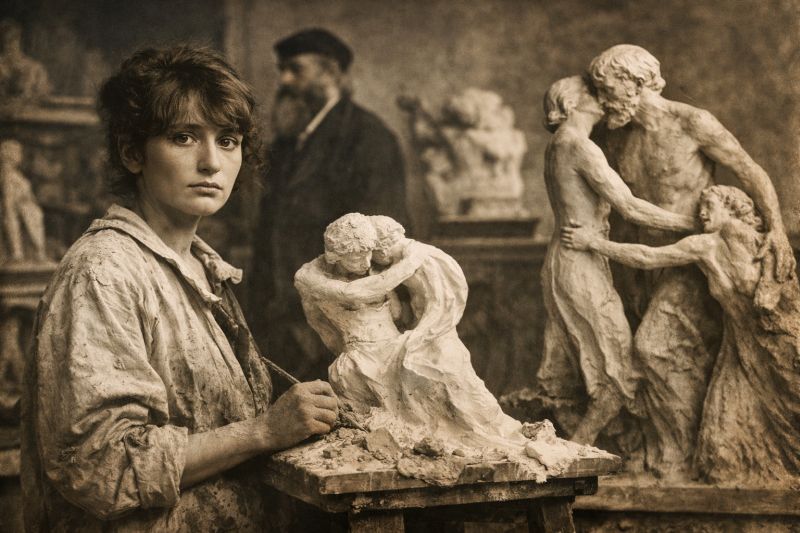
Camille Claudel: Genius in the Shadow of Recognition
In late 19th-century France, Camille Claudel created sculptures that pulsed with emotion and movement.
Working alongside Auguste Rodin, her talent was undeniable — yet her name was long overshadowed by his. Her works, such as The Waltz and The Age of Maturity, revealed psychological depth rarely seen at the time.
Recognition came slowly, and largely after her lifetime. Today, she stands as a symbol of how female sculptors were often seen — but not fully acknowledged.
Her story is not just about art. It is about visibility.
Barbara Hepworth: Shaping Modern Sculpture Through Form
In 20th-century Britain, Barbara Hepworth redefined what sculpture could be.
Moving away from traditional figurative work, she embraced abstraction — creating smooth, flowing forms inspired by nature, landscapes, and human connection. Her sculptures often feature pierced shapes and open spaces, inviting light to become part of the work itself.
At a time when few women were recognized in modern art, she became a leading figure of the movement. Through her vision, female sculptors helped shift sculpture from representation to experience.
A new dimension of sculpture was emerging — one shaped not only by form, but by emotion.
Augusta Savage: Sculpting Identity and Opportunity
Across the Atlantic, in the United States, Augusta Savage used sculpture as both art and activism.
A central figure of the Harlem Renaissance, she created powerful works celebrating Black identity and culture. At the same time, she founded schools and supported young artists, opening doors that had long been closed.
Hana Wichterlová: Finding Form in Simplicity
In the early 20th century, Hana Wichterlová brought a distinct voice to modern sculpture in Central Europe.
Her work focused on clean lines, organic shapes, and quiet harmony. Rather than dramatic expression, she explored balance, form, and material with subtle precision.
In a field dominated by monumental statements, she proved that female sculptors could redefine strength through simplicity.
Mária Bartuszová: Sculpting Emotion Through Form
Working in Slovakia, Mária Bartuszová developed a deeply personal and experimental approach to sculpture.
Using plaster and unconventional techniques, she created soft, organic forms that seemed to breathe and expand. Her work explored themes of touch, growth, and human connection — long before these ideas became widely discussed.
Today, her legacy is gaining international recognition, proving that female sculptors do not need to be loud to be powerful.
Redefining Form: Female Sculptors Shaping Contemporary Art
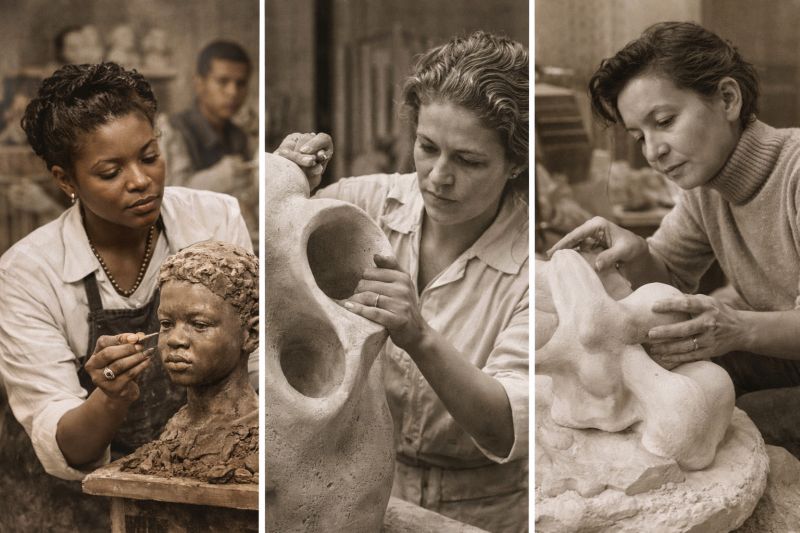
Today, female sculptors are no longer working from the margins. They are leading conversations, redefining materials, and expanding what sculpture can be.
From monumental installations to deeply personal forms, their work moves beyond tradition — into experience, identity, and space itself.
Niki de Saint Phalle: Bold, Playful, Unapologetic
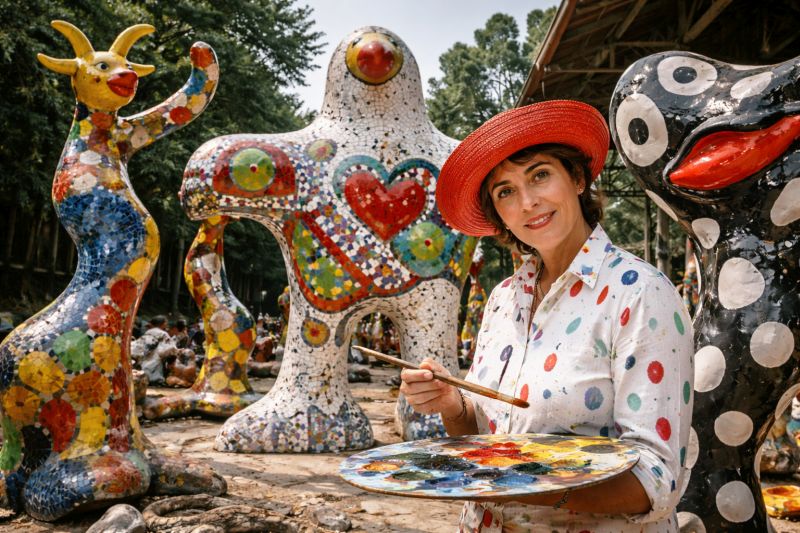
Color exploded into sculpture through the work of Niki de Saint Phalle.
Her iconic Nanas — large, vibrant female figures — challenged traditional representations of the female body. Joyful, exaggerated, and impossible to ignore, they turned public spaces into celebrations of femininity and freedom.
She proved that female sculptors could be loud, visible, and radically expressive.
Louise Bourgeois: Where Sculpture Meets Emotion
Some artists don’t just create — they reveal.
Louise Bourgeois transformed sculpture into a deeply emotional and psychological experience. Her work explores memory, identity, and the complexities of the human condition, often through organic, symbolic forms.
She is widely known for her monumental spider sculptures, including Maman, which embody both strength and vulnerability. While we have explored her artistic journey in our article 15 Famous Female Painters Who Changed the World, her impact on sculpture deserves equal recognition.
Elisabeth Frink: Strength in Raw Expression
In post-war Britain, Elisabeth Frink created sculptures that felt both fragile and intense.
Her figures — often men, animals, or hybrid forms — carried tension, vulnerability, and strength. Rough surfaces and distorted shapes reflected the emotional weight of her time.
Through her work, female sculptors explored not only beauty, but also discomfort and truth.
Rachel Whiteread: Sculpting the Invisible
Rachel Whiteread changed the way we see sculpture.
By casting negative spaces — the inside of a room, the underside of a chair — she made absence visible. Her work invites viewers to notice what is usually overlooked.
In doing so, she showed that female sculptors are not just creating objects, but new ways of seeing.
Scale expanded. So did meaning.
Magdalena Abakanowicz: From Forms to Forests
Magdalena Abakanowicz pushed sculpture beyond individual pieces into entire environments.
Her haunting installations — crowds of headless figures, vast organic structures — explore identity, repetition, and humanity. Some of her works resemble forests or silent gatherings, immersing the viewer completely.
She reminds us that female sculptors can shape not just objects, but entire worlds.
Ruth Asawa: Lightness That Holds Power
At first glance, Ruth Asawa’s wire sculptures seem almost weightless.
Suspended in air, they create intricate, flowing forms that shift with light and movement. Yet behind their delicacy lies extraordinary discipline and innovation.
Her work shows that female sculptors can transform the simplest materials into something profound.
And today, the conversation continues — louder and clearer than ever.
Simone Leigh: Centering Identity and History
Simone Leigh brings history, identity, and the Black female experience into powerful sculptural form.
Her large-scale works often draw from African traditions and architecture, combining them with contemporary themes. Awarded the Golden Lion at the Venice Biennale, she stands at the forefront of global contemporary art.
With her voice, female sculptors are not just part of the conversation — they are defining it.
From color to space, from silence to statement — the boundaries of sculpture have been reimagined.
Shaping the Future: What We Can Learn from Famous Female Sculptors
Across centuries, famous female sculptors have done more than create art — they have challenged norms, redefined materials, and claimed space in a world that often overlooked them.
Their stories remind us that recognition may come late, that paths are rarely linear, and that quiet persistence can shape entire industries. Whether working with stone, wire, or bold new forms, they prove that creativity has no age, no single path, and no limits.
If there’s one takeaway, it’s this: your voice, your vision, and your work matter — even before the world fully sees them.