
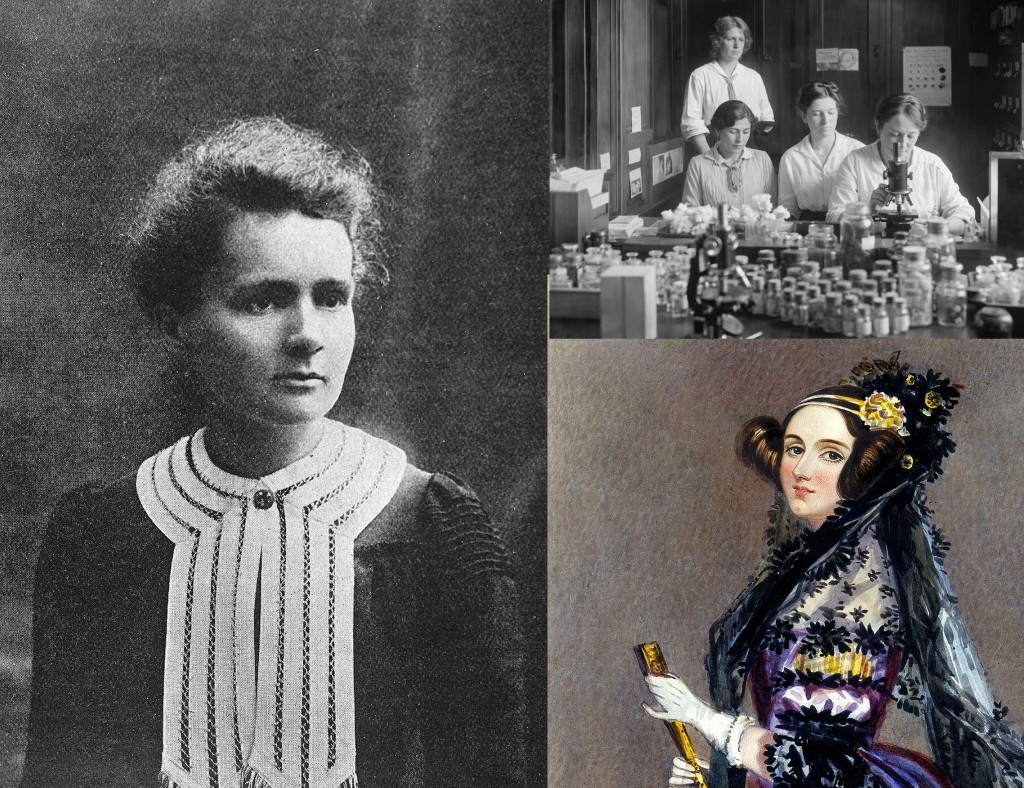

Science is often portrayed as a straight line of progress driven by a few celebrated names. In reality, it is a story of courage, imagination, and persistence—one in which famous women in science have always played a vital role, even when history tried to write them out. From ancient mathematics to space exploration and modern genetics, these women expanded what we know about the world while redefining what is possible for those who follow.
This article celebrates some of the most influential women in science—not only for their discoveries, but for the determination, creativity, and leadership they embody.
Marie Curie (1867–1934)
Marie Curie is arguably the most famous woman in science. A pioneer in the study of radioactivity, she discovered two new elements—polonium and radium—and developed techniques that laid the foundation for modern nuclear physics and medical imaging. Curie was the first woman to win a Nobel Prize and remains the only person to win Nobel Prizes in two different scientific fields (Physics and Chemistry). Her work saved countless lives and reshaped scientific research.

Ada Lovelace (1815–1852)
Often regarded as the world’s first computer programmer, Ada Lovelace worked on Charles Babbage’s Analytical Engine. She recognized that machines could process not only numbers but also symbols, music, and text. Her visionary notes included the first algorithm intended for a machine, anticipating modern computing more than a century before its realization.

Emmy Noether (1882–1935)
Emmy Noether revolutionized mathematics and theoretical physics. Her theorem linking symmetries and conservation laws is fundamental to modern physics, including Einstein’s theory of relativity. Albert Einstein himself described her as one of the most important mathematicians of her time. Despite facing gender-based barriers, her influence remains central to contemporary science.
Rosalind Franklin (1920–1958)
Her meticulous work with X-ray diffraction produced the now-famous Photo 51, which provided crucial evidence for the double-helix structure of DNA. Although her contribution was not fully recognized during her lifetime, Rosalind Franklin’s research is now acknowledged as essential to one of the most important scientific discoveries of the 20th century.

Chien-Shiung Wu (1912–1997)
Known as the “First Lady of Physics,” Chien-Shiung Wu made critical contributions to nuclear physics. Her experimental work disproved the law of conservation of parity, reshaping fundamental physics. Although her male colleagues received the Nobel Prize, Wu’s role is now recognized as indispensable.
Barbara McClintock (1902–1992)
Barbara McClintock discovered “jumping genes,” or transposons, revealing that genes can move within the genome. Her findings challenged established genetic theories and were initially met with skepticism. Decades later, her work was validated, earning her the Nobel Prize in Physiology or Medicine in 1983.
Hypatia of Alexandria (c. 350–415)
One of the earliest known women scientists, Hypatia was a mathematician, astronomer, and philosopher in ancient Alexandria. She made significant contributions to geometry and astronomy and was a respected teacher. Hypatia’s life and tragic death symbolize both the power of knowledge and the dangers faced by women intellectuals in history.

, Image created with AI
Caroline Herschel (1750–1848)
Caroline Herschel helped map the universe at a time when women were rarely seen as scientists. She began as her brother’s assistant and soon became a respected astronomer in her own right, discovered comets and catalogued thousands of stars and nebulae. She was the first woman to earn a salary as a scientist. Her life shows how curiosity and dedication can turn a quiet observer into a pioneer of discovery.
Mary Anning (1799–1847)
Mary Anning was a self-taught fossil hunter who transformed our understanding of life on Earth. Growing up in poverty on England’s Jurassic Coast, she supported her family by collecting fossils—many of which turned out to be world-changing discoveries. Her finds, including the first complete ichthyosaur skeleton, helped establish the science of paleontology and showed that groundbreaking insight can come from outside elite institutions.
Lise Meitner (1878–1968)
Lise Meitner was a brilliant physicist whose work led to the discovery of nuclear fission. Forced to flee Nazi Germany because of her Jewish heritage, she continued her research in exile and provided the theoretical explanation for a discovery that reshaped science—and history. Although she was denied the Nobel Prize awarded to her male colleague, Meitner’s legacy stands as a powerful reminder of integrity, resilience, and intellectual courage.
Barbara McClintock (1902–1992)
Barbara McClintock changed genetics by discovering that genes can move within the genome—what she called “jumping genes.” At first, her ideas were dismissed as too radical, and she worked largely alone for years. Decades later, her work was recognized as revolutionary, earning her a Nobel Prize. McClintock’s story is a testament to trusting your insight, even when the world isn’t ready to listen.
Valentina Tereshkova (1937– )
In 1963, she made history as the first woman in space, orbiting Earth 48 times aboard Vostok 6. Chosen from hundreds of candidates, the former textile worker shattered expectations and redefined who belongs in space. This historic flight remains a symbol of courage, ambition, and the power of daring to go where no woman had gone before.
Watch the video and be inspired by Valentina Tereshkova—the fearless woman who dared to leave Earth behind and proved that the sky was never the limit:
Dorothy Hodgkin (1910–1994)
Using X-ray crystallography, she unlocked the structures of life-saving molecules, including penicillin, vitamin B12, and insulin. Despite living with severe rheumatoid arthritis, Dorothy Hodgkin pursued her research with extraordinary perseverance, showing how patience, precision, and compassion can change millions of lives.
Grace Hopper (1906–1992)
Grace Hopper was a visionary computer scientist who believed technology should be understandable and accessible. She helped develop COBOL, one of the first programming languages designed for humans rather than machines. A mathematician, innovator, and U.S. Navy rear admiral, Hopper challenged conventions well into her later years, proving that innovation has no age limit.
Jane Goodall (1934– )
Through decades of close observation of wild chimpanzees, this pioneering scientist revealed that they use tools, form complex social bonds, and experience emotions—discoveries that fundamentally changed how we understand both animals and ourselves. Her work transformed primatology and inspired a global movement for conservation; today, Jane Goodall’s career stands as a powerful example of how science, empathy, and compassion can—and should—coexist.
Katherine Johnson (1918–2020)
Katherine Johnson was a mathematician whose calculations were essential to NASA’s early space missions, including John Glenn’s orbit of Earth and the Apollo moon landings. Her work helped ensure the success and safety of human spaceflight and gained wider recognition through the book and film Hidden Figures.
Famous Women in Science: Conclusion
The women highlighted in this article represent only a small part of the scientists who shaped human knowledge over centuries.
Their achievements advanced science, challenged social norms, and inspired future generations to dream bigger.
Recognizing their stories helps build a more inclusive and truthful history of science.
It is a history that celebrates talent, resilience, and brilliance in all its forms.


