
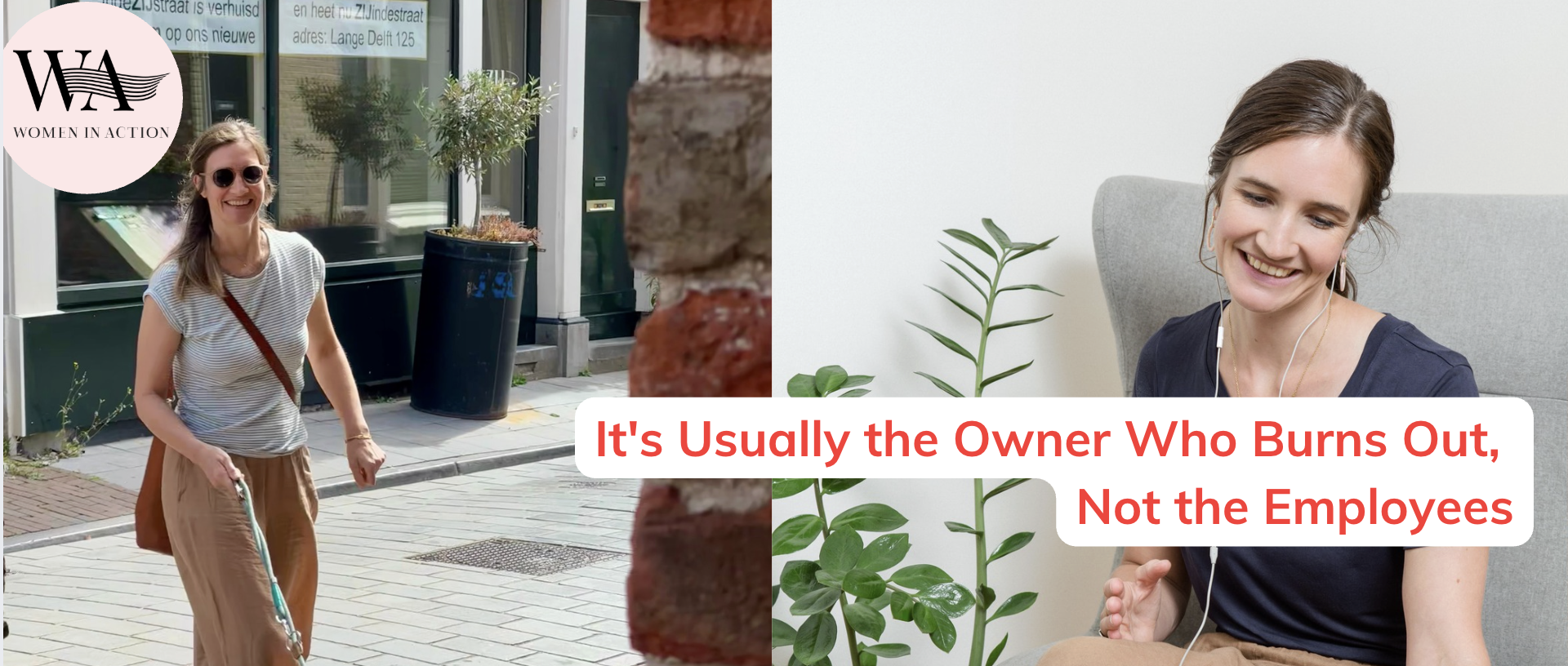

She left her position at Prague University of Economics and Business because of her husband’s career. Today, Dr. Judith Schmitt runs her own change-management consultancy in Germany, helping small businesses survive transformation without losing their people — or their culture. In this interview, she talks about loss, motherhood, and the three signals that tell you your team is about to break.
Dr. Judith Schmitt on Navigating Change at Work and in Life
What did it feel like when you realised you wouldn’t be teaching at VŠE anymore?
I wish I could say I was completely open to the change — it’s my profession, after all! But honestly, leaving Prague was quite challenging for me. I had built a life there that I really loved — not only my academic career, but also a wonderful network of like-minded, international people. So there is definitely a sense of loss. Luckily, I still have a minor involvement teaching students in Germany, which means I don’t have to say goodbye to academia altogether. But I miss the international community at the Prague University of Economics. At the same time, the move has opened a new chapter for me professionally, and I am learning to appreciate it rather than constantly comparing it to what I have left behind.
What do you miss most about working with students, and what did you carry over into consulting?
What I really love about teaching is seeing that moment where something clicks for someone. Like when an idea changes the way my students look at themselves, their work, or a situation. I always tried to connect the theory of organisational behaviour to real-life problems, to give students something they could actually use. The spark of an idea and the personal development I enable are things I would like to carry on in my consulting practice. Whether I work with a leader, a team, or an entire organisation, I want people to leave with a new perspective and the understanding that they have more options than they thought they would.
Read also: Famous Women: The Brontë Sisters and the Power of Sisterhood
How did you personally come to terms with giving up your own professional footing?
This is so true. The feminist in me definitely had a few conversations with me about this! But ultimately, the benefits for us as a family relocating outweighed the sacrifices I made personally. My husband and I made those decisions together and always looked carefully at the opportunities the move would bring to both of us and to our family. That doesn’t mean the decision was always easy.
“It’s important to acknowledge that when women relocate for a partner’s career, there can be real professional costs — and this shouldn’t be romanticised.”
I am seeing more and more couples in my circle who have relocated for the woman’s career as well. I hope this will become more equalised in the future.
Read also: How Many People Have a Side Hustle Right Now? The Numbers Might Surprise You
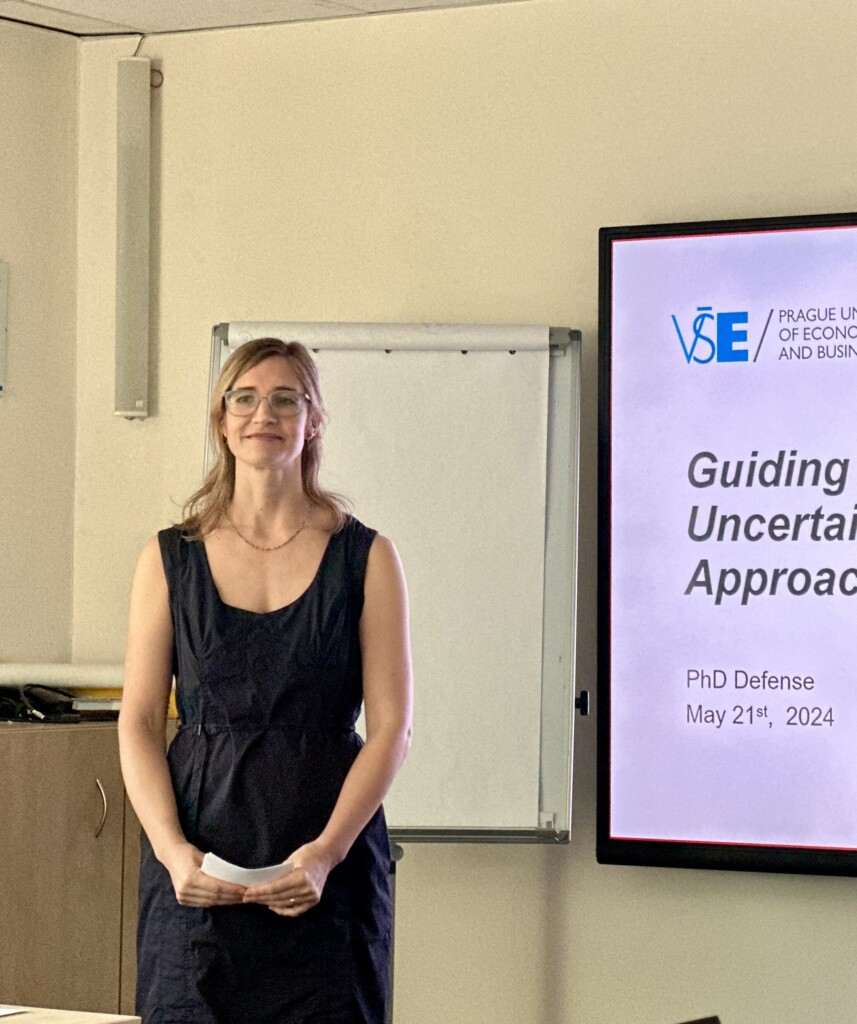
Your PhD is titled “Guiding Employees in Disruption-led Uncertainty.” Did it feel ironic that you were living through exactly that yourself?

It sure did. I often had to remind myself to practice what I preach! When you research and work on resilience, change and adaptation, it can be tempting to think you should master it better than others. The truth is, I just as well experience uncertainty, doubt and frustration. But successful adaptation is not about never struggling — it’s about acknowledging the challenges, making sense of what is happening, and asking yourself: What is in my power to change, and what are the resources I have that help me get there?
What does a real week look like when you’re building a business from scratch and raising a family at the same time?
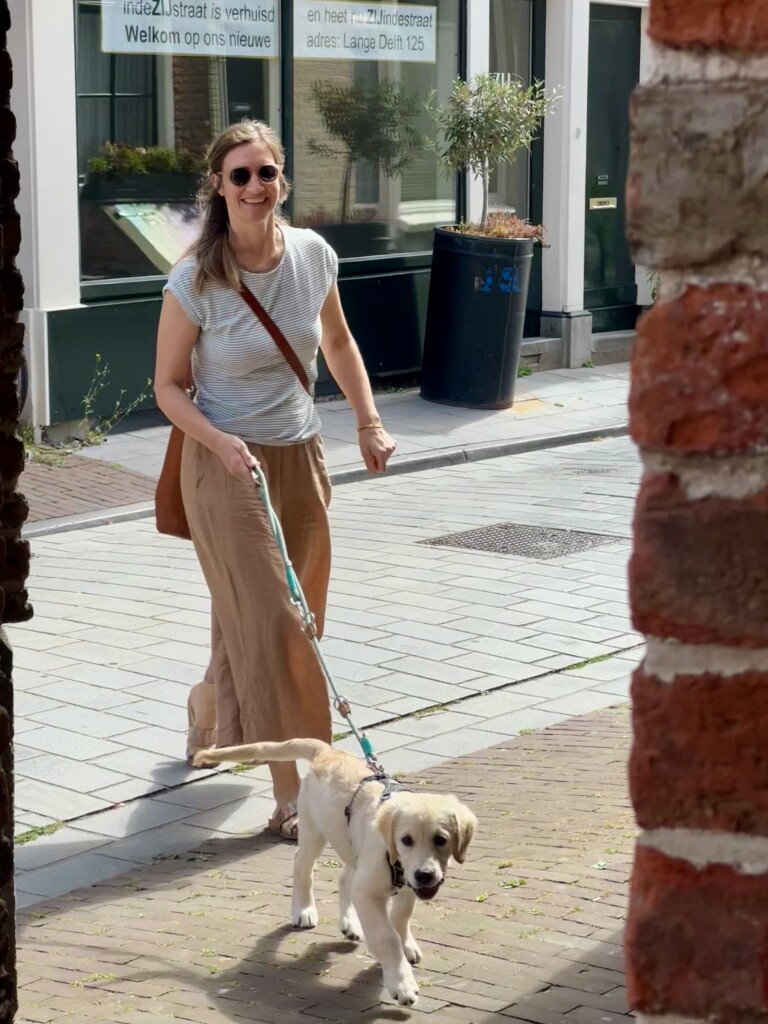
I am wearing many hats each day — consultant, researcher, teacher, mother, wife, and now puppy-mom, too. It can be stressful at times, but I actually enjoy the variety. My boys know a lot about what I do, and we talk about my work, too. I hope that seeing their parents pursue fulfilling careers — with all their successes and setbacks — gives them a realistic picture of what working life can look like.
I also think the German public school system still has room for improvement when it comes to genuinely making it possible for both parents to pursue their careers, but we function well as a family, as a team. It’s always a learning journey, adapting to the challenges ahead of us. And now, our puppy is teaching us a whole new level of flexibility…
Which of the things you study professionally did you have to apply to yourself first, as a mother?
All of the above, really. My greatest learning as a mother — and something my research consistently shows — is the importance of empowerment during change. We can’t always choose what happens to us, but we can choose how we respond to it.
Many of our readers are dealing with this right now: after maternity leave, “their” position or sense of stability no longer exists. What would you tell them — not as a consultant, but as a mother who’s been through it?
I would tell them: you don’t have to become the person you were before. I believe motherhood changes us for the better. This can look very different from person to person, but I’ve seen many mothers gain strength, resilience, and a stronger desire for meaningful work. I wish for all my fellow working mothers to realise how much they have grown from this experience and to find the right setup for themselves.
On the other hand, I don’t want to underestimate it — going back to work after maternity leave means the whole family has to adapt, so it’s a lot about finding a way that respects everyone’s needs. Lastly, my advice would be to manage your own expectations and standards. We mothers often want to be perfect at everything. This can easily make it seem like you’re failing, even though you’re probably doing a pretty amazing job.
You’ve referenced the IGLOO framework — Individual, Group, Leader, Organisation, Overarching context — in your work. Can you walk us through it using a small company of around 12 people going through change?
Absolutely. What I love about the IGLOO framework is that it reminds us change doesn’t happen at just one level. Even in a company of 12 people, you have individuals, teams, the leader, the organisation itself, and the wider context. All of these levels interact.
At the individual level, I would ask each person: ‘What are you most concerned about, and what would help you feel confident about the change?’ — offering a space for people to articulate their concerns, expectations and needs, rather than assuming everyone experiences the change the same way.
At the group level, people usually have a shared identity about who they are as a team. During transformation, this identity is subject to change, and it’s crucial that all team members are still on board with the newly formed identity. In a teambuilding workshop, I’d ask: ‘What makes you you as a team? How does the upcoming change affect the way you work together, and what do you need to change it for the better?’
Leaders have a pivotal role during change. In a 12-person business, I assume there’s only one leader — she has to manage the transition and safeguard her employees’ wellbeing along the way. This requires high reflective skills, resourcefulness, a great portion of resilience, and a clear vision that can be applied flexibly. I would start by asking: ‘What does your team need from you right now? And what do you need from them?’
The organisational level gives us the holistic perspective — looking beyond people’s attitudes and asking whether structures, processes, roles, communication and resources are aligned with the desired change. You can’t ask people to work differently while keeping everything around them exactly the same. A key question here: ‘Does the way we are organised actually support the change we are trying to make?’
And finally, the overarching context. A small business doesn’t operate in a vacuum. Customers, competitors, the labour market, regulation, technology or economic developments can all shape what is possible. I would ask: ‘What is happening around us that we cannot control — and what does it mean for how we approach this change?’
For me, that’s the real value of IGLOO: it prevents us from looking for a single explanation or a quick fix. If change isn’t working, we can ask — is the issue with the individual, the team, the leadership, the organisation, or the context we’re operating in? Often, the answer is a combination of several levels.
What are three signals that tell a business owner “your people are at breaking point, act now before it’s too late”?
Three signals I would look at are sick rate, unwanted turnover, and — most importantly — the voices of your people, so make sure they’re being heard. For people to raise their concerns, you need a culture of open communication and psychological safety. Sometimes the most important warning sign isn’t visible in a KPI. It’s something an employee says in a five-minute conversation that nobody has really listened to before.
In a small business, it’s often the owner who burns out, not the employees. How do you address that with her?
The causes of burnout are very individual, and so are the approaches to prevent it. So I wouldn’t approach it with a catalogue of solutions, but rather help the owner identify the signals that indicate her stress level is too high, and enable her to develop strategies to redesign her work in a healthier way.
Another fruitful approach is looking at meaningfulness — it’s what you could call your immune system for burnout prevention. I’d like to work with her on ways to help her experience her work as more meaningful, ensuring she feels a sense of accomplishment and makes a difference. In my experience, those feelings are there, but sometimes they’re not visible to us, or they’re buried under too much workload, time pressure, or negative emotions. Helping someone reconnect with what makes their work worthwhile can be a powerful part of building a healthier way of working.
When is change in a company — a new system, restructuring, layoffs — an opportunity, and when is it a real threat to company culture? How can an owner tell the difference in advance?
It’s always a mix of both. For me, the question isn’t whether we can eliminate that uncertainty — we can’t. It’s whether we can create enough clarity, participation and trust for people to navigate it. Culture is the glue that holds an organisation together. During change, some things may need to evolve, but you have to be very intentional about what you want to preserve. That’s where good change management comes in — not resisting change, but helping people move through it without losing what makes the organisation itself.
Your motto is: “Lasting change begins with people who are empowered to learn, adapt and grow.” What does that mean in practice for a woman standing exactly where you stood a year ago?
For me, it means that lasting change doesn’t happen because someone designs the perfect strategy and tells people what to do. It happens when people feel empowered to understand the change, contribute to it, and grow with it.
“But most of all, I believe the journey never ends. Regardless of the path our lives take, we are never ‘done’ with learning and developing.”
I had to remind myself of that when I left Prague. I didn’t lose my professional identity — I had to develop it further. And I think that’s something many women can relate to. Our careers and lives don’t always follow the plan we made at 30 or 35, especially in this fast-moving world we live in. Sometimes a new chapter asks us to redefine what success looks like.
Where do you see your business a year from now — and what would it mean to you to one day return to teaching?
A year from now, I would like to look back and see that I have made a difference for many SMEs by supporting them through difficult transition phases. I hope that with every consulting experience, I can learn and grow myself. I do plan to go back to teaching students one day — hopefully with an even richer experience in real-world problem-solving that I can pass on to them.
What’s the first thing you’d recommend a small business owner do this week if she feels her company needs change but doesn’t know where to start?
Talk to your people and really listen to what they say. Change is always a team sport; that’s why a participatory approach is successful. The people who are closest to the work often know a lot more about what needs to change than we give them credit for. A participatory approach doesn’t mean everyone gets to decide everything — it means people have a voice in shaping the future.