
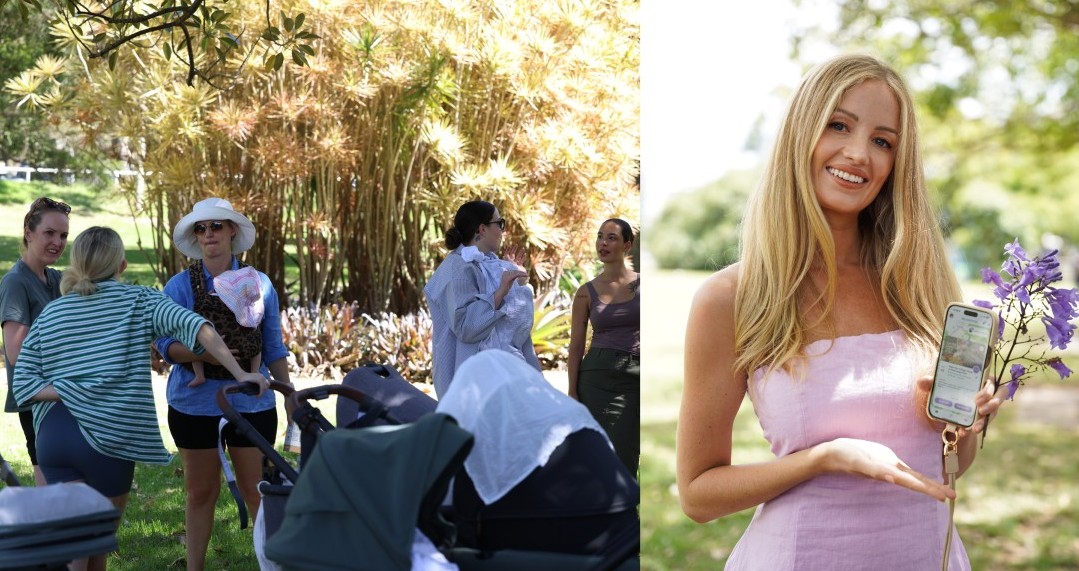

Motherhood can be full of love and joy, yet it can also feel deeply isolating. Brittany Bloomer experienced both sides after becoming a first-time mother in Estonia, far from her family, friends and native language. One small café meet-up with other mums changed everything.
That experience became the starting point for Villagehood, an app that helps mothers discover friendships, activities and support within their local communities. In this interview, Brittany shares the story behind the platform, what she has learned about building a community and how technology can help bring people together in real life.
How Villagehood Turns Online Connections Into Real Friendships
Before Villagehood, you spent years building Pound Paws. What inspired you to start it, and what did it teach you about building a community that you later brought into Villagehood?
I started Pound Paws around 10 years ago. Animal welfare first became a passion of mine during high school, which later developed into a charity once I graduated. I remember being shocked to discover that around 250,000 happy and healthy pets were being euthanised each year, and I wanted to do whatever I could to help rehome as many pets as possible.
Pound Paws originally started as an online website/search engine, where we would livestream pets looking for homes. It then evolved into awareness campaigns and eventually our Dog Day events.
One of the biggest things I learnt was that shifting away from a traditional campaign-style approach (using confronting images and statistics) towards something more relaxed, positive and feel-good really worked. Through our Dog Days, we could bring a huge community of people together, while still educating them about animal welfare, raising funds and, most importantly, helping pets find homes.
Seeing how the community responded to those events taught me so much about building community. People crave connection and want to feel like they’re part of something and contributing to the journey. At every Dog Day, we had people from the community volunteering, adopting, fundraising, sharing the event on social media and helping us spread the message.
I’ve brought that same approach into Villagehood. Rather than simply building an app for mums, we invite mums to be a part of building the village with us—whether that’s hosting a local meet-up, creating a Village, inviting another mum along or simply helping us spread the word.
Over the years, I saw how powerful community can be when you give people a reason and a space to come together. I think that definitely carried into Villagehood.
Villagehood grew from your own experience of feeling isolated as a first-time mum. What did that period of your life look and feel like?
Becoming a mum was one of the most beautiful, but also one of the most isolating periods of my life. I became a first-time mum in Estonia, far away from my family, friends and even my native language. I remember feeling incredibly anxious about giving birth in a foreign country and desperately craving companionship with other mums I could share the journey with, ask questions and build friendships with.
I kept thinking about how sad it would be if my first experience of motherhood wasn’t shared with other mums. So I desperately tried to find them. I would scroll through Facebook groups, approach mums in parks and look for any opportunity to connect, but it wasn’t an easy process.
Eventually, I connected with a few pregnant mums and decided to organise a little meet-up at a café. That one meet-up completely changed my experience of motherhood.
“I went from feeling anxious and lonely, doing the same solo walks and routine every day, to suddenly having mum friends to go on little adventures with—we’d visit parks, cafés, museums and experience motherhood together.”
I feel like I experienced both extremes: what motherhood can feel like in complete isolation, and then what it can feel like when you have a village around you. I could so easily have had a completely different experience if I hadn’t found those women.
Those friendships turned what had felt lonely and overwhelming into one of the happiest and most joyful periods of my life. That’s a huge part of why I wanted to create Villagehood. Finding mum friends shouldn’t have to be so difficult or come down to luck. I want that kind of connection to be accessible to every mum, because I know firsthand just how much having a village can change your entire experience of motherhood.
What was the first practical step you took to turn Villagehood into a real app?
When I returned home to Australia from Estonia, I knew how important having a community of mums around me had become, and I wanted to make sure I had that same sense of connection here. So I created a Facebook group for mums in the Southern Highlands, which quickly grew to around 1,800 members.
I started organising regular meet-ups and events through the group, but it required a huge amount of admin—constantly creating graphics, writing posts, organising events and trying to keep everyone engaged.
It showed me two things. Firstly, it didn’t matter where you were in the world – mums were craving connection. And secondly, there had to be a simpler way to help them find it.
I remember having a conversation with my brother and saying, “There has to be an easier way for mums to connect.” He has a very solution-focused, tech-developer brain, so immediately we started bouncing ideas around about what that could look like as an app.
That conversation really became the starting point for Villagehood. We began mapping out what an app would need to do at its simplest level: help mums discover other mums nearby, see what’s happening in their local area and, most importantly, make it easier to turn an online connection into a real-life friendship.
What part of building the app was much harder than you initially expected?
This question would probably be best answered by my brother and co-founder, who has quite literally built this app with his bare hands! He has put an incredible amount of work into making something that is technically quite complex feel really simple and seamless for mums to use.
What I’ve learnt through the process is that an app is never really “finished”. As Villagehood grows, we’re constantly receiving feedback from mums about what they love, what they need and what could make their experience better. We genuinely listen to that feedback and continue modifying and evolving the app around what our mums are asking for. That’s something really special about Villagehood—the community is helping us build it.
But I think the biggest learning has been that building the technology is only one part of building an app like this. You can create a beautiful platform, but you also need to build the community inside it.
It’s not just about getting mums to download Villagehood. We want them to actually participate—send that first message, join a Village, attend a meet-up or put themselves out there and connect with another mum. That’s ultimately what makes Villagehood work.
We’re incredibly grateful for the mums who have embraced it so far and are helping us grow the village alongside us.

You tested Villagehood with around 1,000 mothers. What did they tell you that surprised you most? Did any feedback significantly change the original version of the app?
What surprised me was just how many mums were craving the same thing: real-life connection.
We heard from women with completely different backgrounds and circumstances, yet so many shared that same feeling of wanting more local connection and not always knowing how to find it.
The feedback definitely shaped the app. We realised it couldn’t just be about matching mums with other mums. Women wanted a reason to connect—activities, events, classes meet-ups, groups and things happening in their local area. That’s become a huge part of Villagehood.
What has building this community taught you about motherhood and the kind of support women really need?
That sometimes mums don’t need another piece of advice—they need another mum.
There is so much information available to us now about parenting, but information isn’t necessarily the same thing as support.
Sometimes what you really need is someone nearby who understands the stage you’re in. Someone you can grab a coffee with, or just a break in your daily routine where you can try out a new pilates class with other mums.
I think motherhood was traditionally surrounded by much more community, whereas now we’re often expected to do so much of it independently. Villagehood is really about trying to rebuild some of that village.
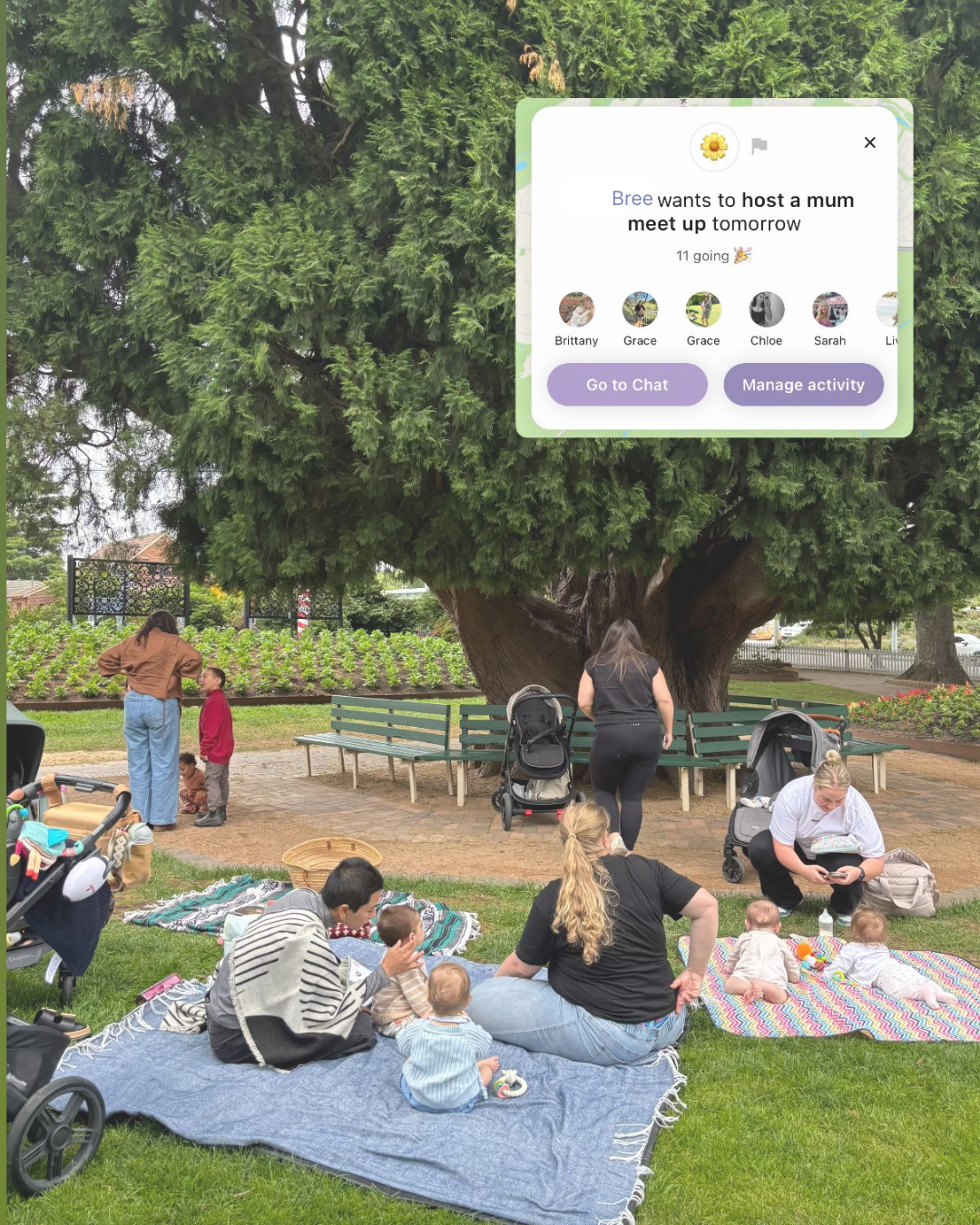
Technology is often blamed for keeping people behind screens, but Villagehood is designed to bring mothers together in real life. How do you create that bridge?
That’s probably one of my favourite things about Villagehood—the app isn’t the destination.
Technology is simply the tool that helps you find your village.
We use location to help mums discover other mums, activities, groups and events around them, but ultimately we want that connection to move offline. It might start with seeing another mum’s profile or joining a Village, but hopefully it ends with two mums having coffee together, going for a walk or turning up to a local event.
For us, success is finding out about mums who have met up IRL and formed friendships.
How do you make Villagehood feel safe and welcoming, particularly for mothers who may be shy, anxious or new to a community?
Safety has been really important to us from the beginning, which is why we have verification processes around profiles and put a lot of thought into who is entering the community.
But I also think emotional safety is just as important.
Turning up somewhere alone can be really intimidating, particularly if you’re already feeling isolated or anxious. So we try to make our events and meet-ups feel really relaxed and welcoming. We constantly say, come on your own. You don’t need to already know somebody.
The whole point is that everyone is there for the same reason—to meet their village.
Is there one friendship, message or meeting created through Villagehood that made you think, “This is exactly why we built it”?
There have been a few, but there is one moment I’ll always remember.
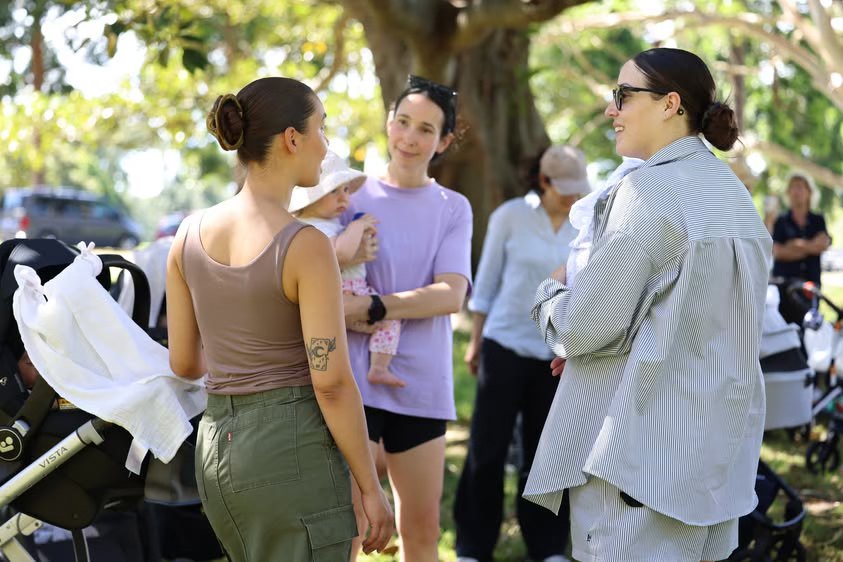
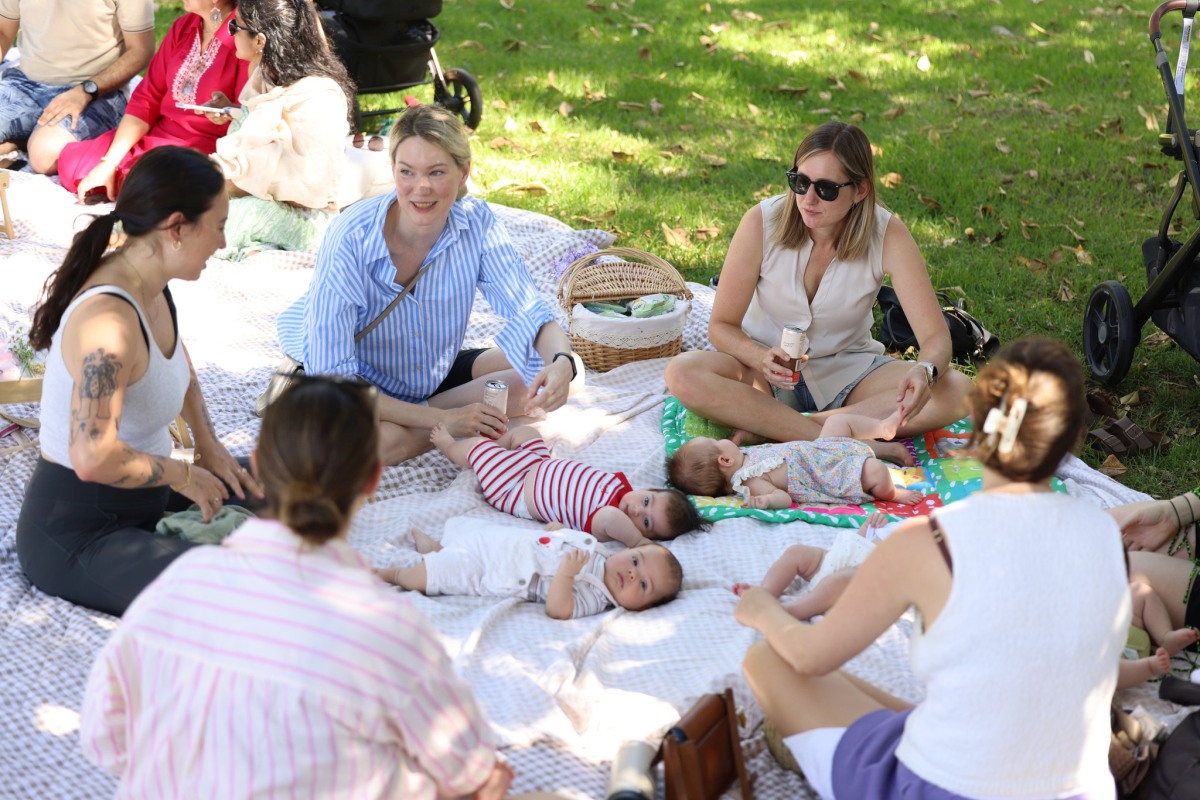
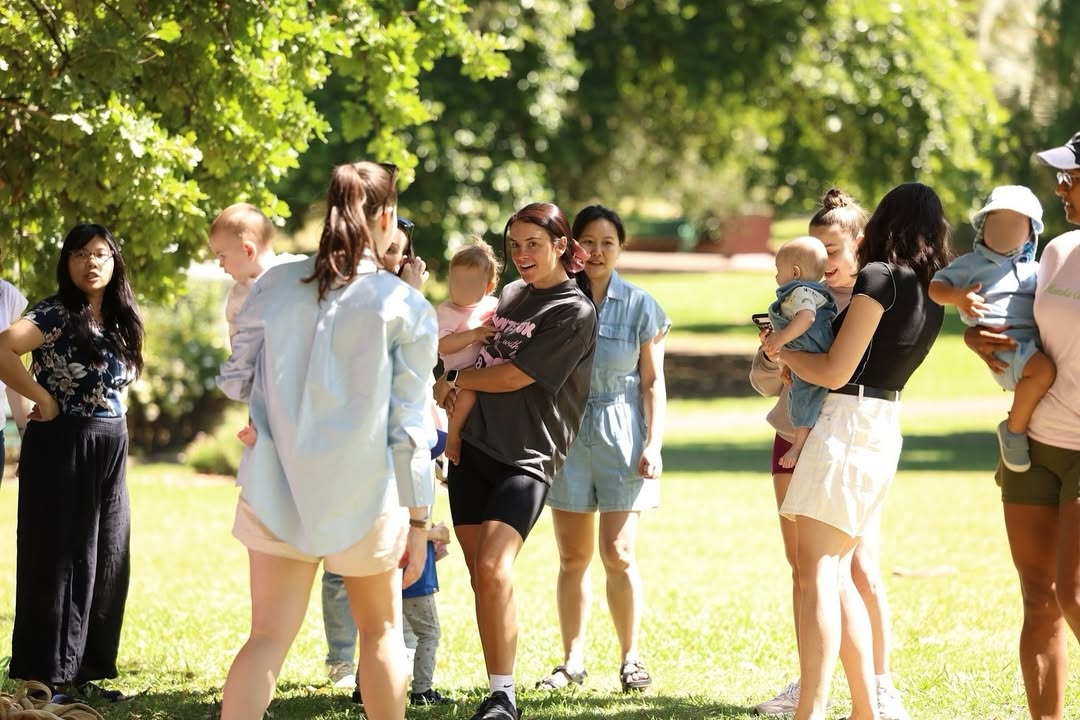
We were hosting a Villagehood picnic at Centennial Park when a lovely mum arrived with her new baby. She was in those really early postpartum days and told us that this was actually her first outing since having her baby.
One of the other mums simply asked her, “How are you going?”
“She immediately burst into tears and said that no one had asked her that yet. Everyone had been asking how the baby was, but no one had really stopped to ask how she was.”
It was such a simple moment, but so beautiful to witness. The other mums immediately rallied around her, and she spent the rest of the morning chatting, sharing and connecting with women who understood what she was going through. You could really see that sense of a village forming around her.
I remember thinking, this is exactly why we built Villagehood.
We’ve also had mums arrive at our events not knowing anybody and message us afterwards saying they’ve met a new friend who lives just around the corner.
They’re such simple connections, but they can make such a difference. Two mums could walk past each other with their prams every day, never knowing they’re both craving the exact same thing—someone to talk to, someone who understands, and a village around them.
How has becoming a mother changed the way you work, lead and make decisions?
It’s changed everything.
I’m much more conscious of my time now. Before becoming a mum, I could work endlessly on something. Now I have to ask myself what actually matters and where my time is going to have the biggest impact.
I also don’t always have the luxury to have calming background music and a fresh coffee to enjoy, whilst catching up on emails. Sometimes, you’ll find me sending emails on the sideline of my sons soccer training, or in the last moments before going to bed.
And with Villagehood particularly, I’m not building something from the outside looking in. I’m living the problem we’re trying to solve, which makes every decision feel very personal.
What is your long-term vision for Villagehood?
I would love Villagehood to become the place women go to find their village—wherever they are.
Whether you’ve just had your first baby, moved to a new suburb or city, or you’re simply going through a stage of motherhood where you’re craving more connection, I want you to be able to open Villagehood and know that there are women nearby.
Long term, I would love to see Villagehood communities across Australia and internationally, but I never want to lose the local feeling behind it.
Even if there are hundreds of thousands of women using Villagehood one day, the outcome we’re trying to create is still incredibly simple: one mum finding another mum and feeling a little less alone.
What would you say to a woman who has identified a problem in her own life and believes her idea could help others?
Sometimes the best ideas come from problems you’ve personally experienced, because you understand the problem on such a deep level. If you’ve found yourself thinking, “Surely there has to be a better way,” chances are there are other women thinking exactly the same thing. I would say start small.
“Talk to other women, ask questions, see if they share the same problem and really listen to what they tell you. You don’t need to have the entire idea mapped out from day one.”
Villagehood has evolved so much from where we started, and a lot of that has come from simply listening to mums. Your own experience might spark the idea, but the people you’re trying to help will ultimately show you what it needs to become.


