
AI promises to make recruitment faster, more efficient and potentially more objective. But greater efficiency does not automatically lead to fairer decisions.
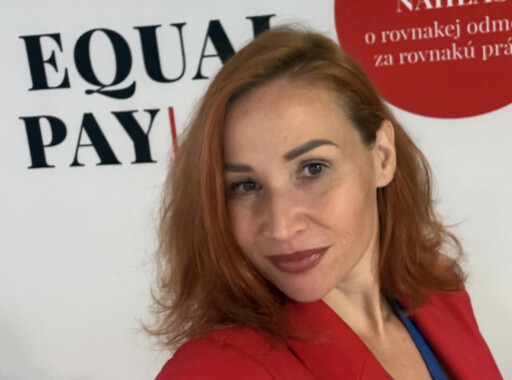
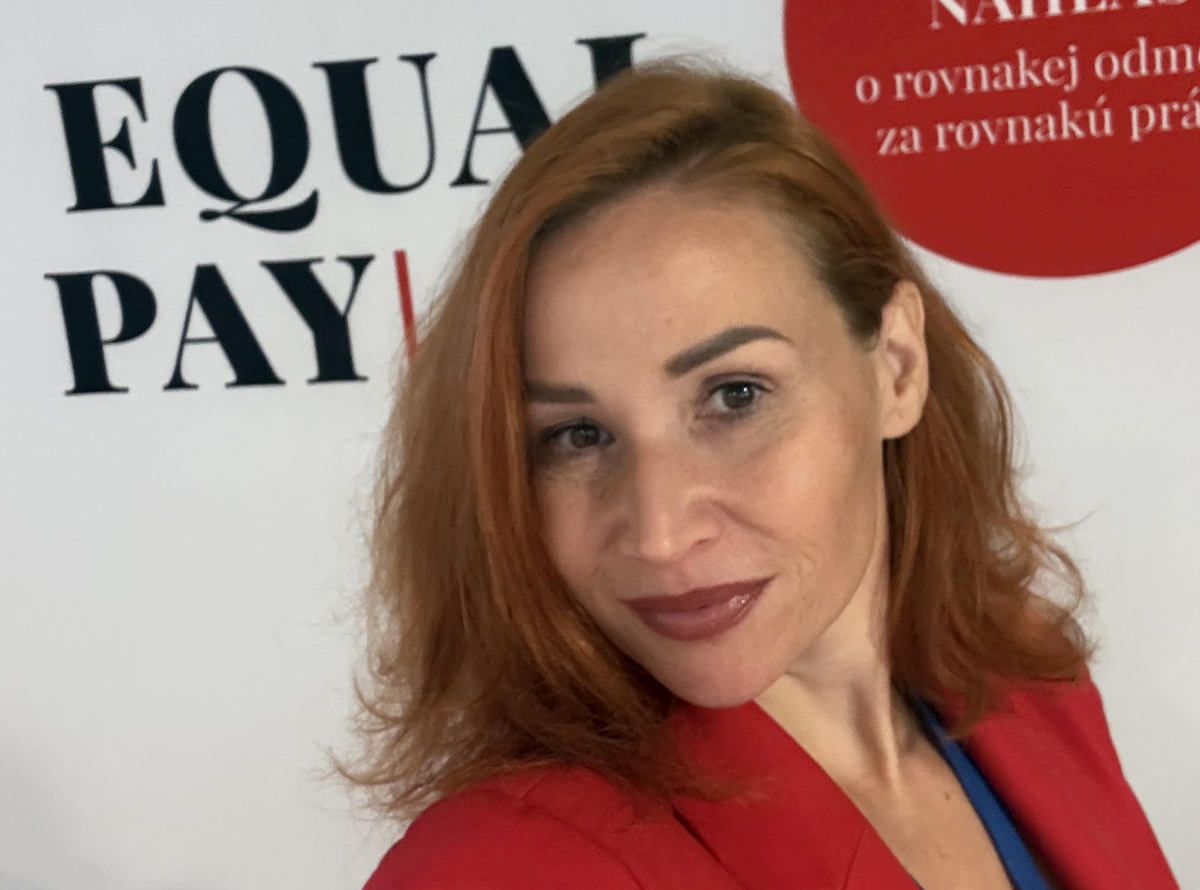
Following our article, AI Is Becoming a Recruiter, but Can Employers Prove Its Decisions Are Fair?, we invited Slovak HR expert Simona Tarnóczy to add a practical perspective to the discussion.
In this Ask the Expert interview, she explains where AI can support HR, how it may reinforce bias and why human judgement remains essential. She also considers whether AI could bring recruitment back to personal meetings and authenticity.
Where AI Ends and Human Judgement Begins
In your experience, how is AI currently changing recruitment? Which tasks can it genuinely help HR professionals with, and where would you no longer entrust it with decision-making?
HR faces the greatest restrictions from a legal perspective, particularly under the EU AI Act. Despite this, various tools can make HR work significantly more efficient. AI tools such as ChatGPT and Gemini can speed up administrative tasks related to drafting internal policies, workplace regulations or job advertisements. They can also help kick-start the process of formulating written content.
I am not referring to legal accuracy here, as that is something I still would not entrust to AI. However, I would introduce AI into HR cautiously. I would also add AI-powered features to applicant tracking systems while treating every CV with respect, because behind each one is still a human being of flesh and blood, not a robot.
Editor’s note: The EU AI Act applies within the European Union. Other jurisdictions also regulate or provide guidance on the use of AI in employment. In the United States, federal anti-discrimination laws apply to AI-assisted hiring, while Singapore has introduced governance frameworks for the responsible deployment of AI. Requirements vary between markets.
One of AI’s greatest promises is the more objective assessment of candidates. But can technology truly remove human bias from recruitment, or might it simply transfer it into a less visible form?
I see this differently. The idea that AI can remove bias from recruitment is a myth. Artificial intelligence can be highly discriminatory because it learns from data that has simply not been historically cleansed of bias.
Employment history reflects inequalities from the past. Women only began entering most professions in larger numbers after the Second World War. In Switzerland, for example, women did not gain the right to vote at the federal level until 1971. Our historical records are therefore full of sources that can reinforce discrimination against women.
If technology draws on this past, it will not eliminate bias. It may merely conceal it behind a well-written prompt or custom source selection through notebook tools.
A notebook tool allows users to provide their own source materials, such as books, podcasts or articles, for the AI to work with.

In your work, you often highlight the importance of competencies and transferable skills. Can AI recognise them when a candidate has an unconventional career path, is changing fields or is returning to work after a longer break?
I will repeat myself: if it is coded correctly. 😊 If you provide AI with the right sources, it can do this.
I once created an experimental group of fictional CVs and used my notebook in Gemini to test its ability to understand transferable competencies and multipotentiality. It worked, and the AI suggested additional questions that could be used to verify the candidate. It was an interesting experience.
In real life, however, applicant tracking systems do not evaluate data in this way. Perhaps I am wrong, and I admit that I may not know everything either, because I am not AI. 😊
Should companies openly inform candidates that their CV, test or video interview is being assessed by AI? What options should candidates have if they believe an automated system has evaluated them unfairly?
This is no longer a matter of a company’s goodwill, but of clear rules established by the EU AI Act. At the same time, I would be careful with the word “assessed.” We should not entrust the assessment and decision-making itself to technology.
The use of artificial intelligence in recruitment, candidate screening and test evaluation, as well as in recording and analysing video interviews, falls directly into the category of high-risk AI systems. Employers are legally required to inform candidates that such a system is being used in the recruitment process.
AI is now being used by both sides: companies use it to screen candidates, while applicants use it to create CVs and cover letters. Is there a risk that recruitment will become a battle between algorithms in which the real person and their potential are lost?
This trend has already been present in the market for several months. Companies create job advertisements with ChatGPT, while candidates respond with AI-generated answers.
That is why I believe AI will ultimately bring us back to people, face-to-face meetings and the search for authenticity, rather than the pursuit of a “120% fit.”
What three principles should companies follow to use AI in recruitment effectively, while remaining fair and maintaining sufficient human oversight?
Continue making hiring decisions yourselves. Look for the qualities that distinguish us from machines and cannot be imitated.
Treat people with dignity. Be respectful, remain humble and show consideration for the people you interact with. This kind of behaviour has somehow begun to disappear from recruitment processes.
Set clear regulations and boundaries. Regulate the use of AI and establish clear limits for how it may be used within company processes, as well as more generally.


