
Helen Keller is often remembered as the deafblind child who learned to communicate with the help of her teacher, Anne Sullivan. Yet this familiar story represents only the beginning of her remarkable life.
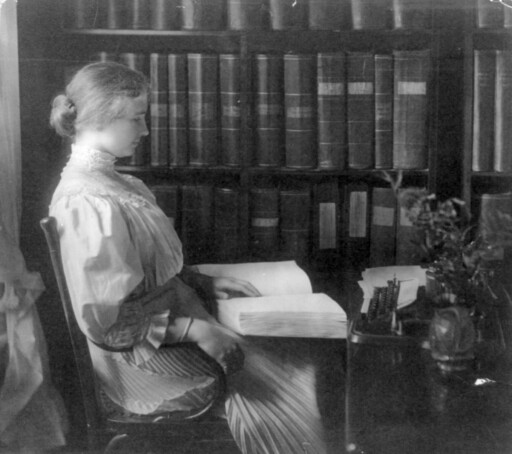
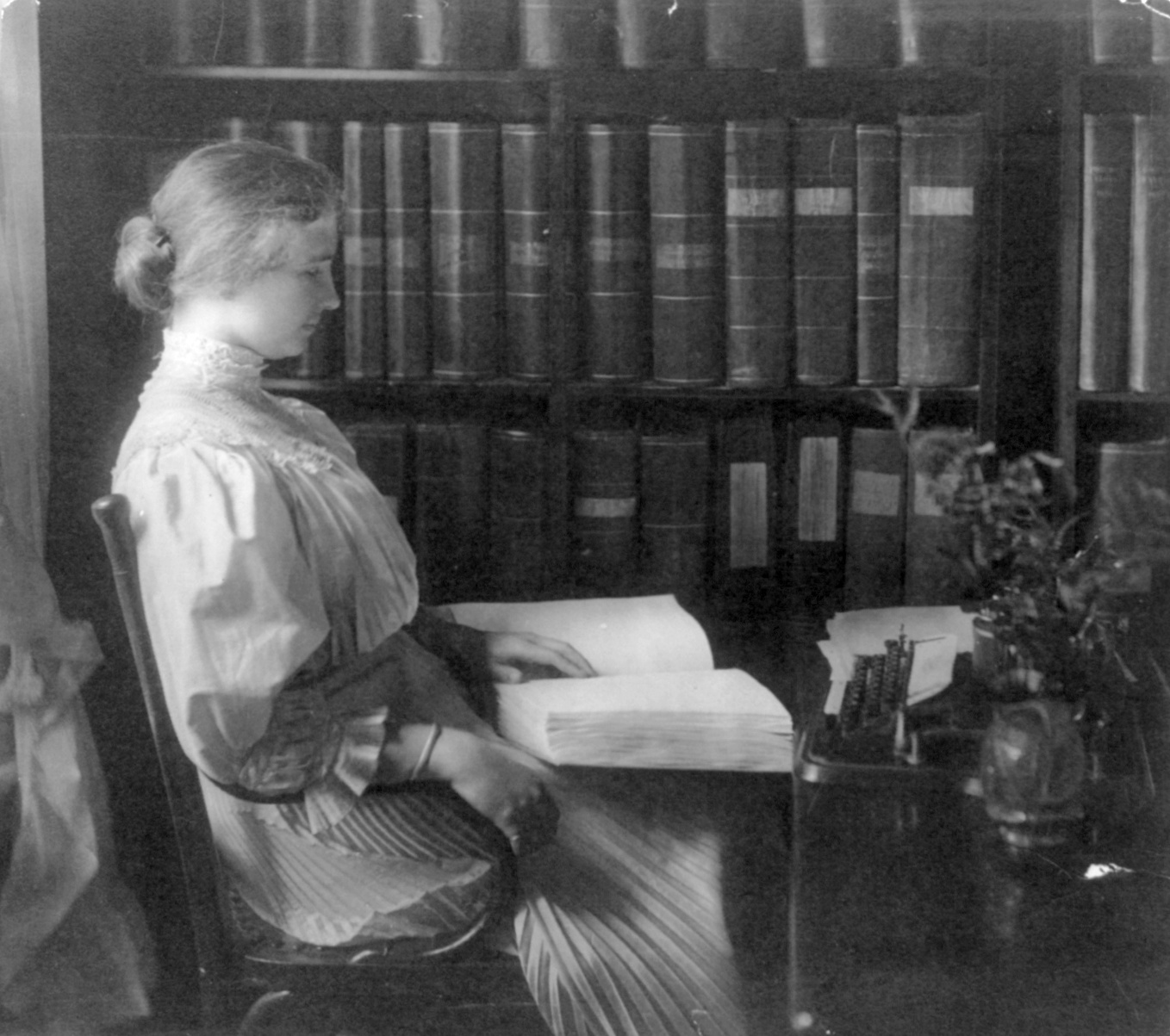
Illustration image: Helen Keller reading Braille, c. 1907. Photo: Unknown author / Library of Congress / Wikimedia Commons, public domain: https://commons.wikimedia.org/wiki/Helen_Keller#/media/File:Helen_Keller15.jpg
Keller became an author, lecturer, political activist and advocate for people with disabilities. She supported women’s suffrage, defended workers’ rights and challenged institutions that limited people’s access to education and public life.
Her story is not simply about overcoming personal adversity. It is also about gaining a voice—and using it to create opportunities for others.
Discovering the Power of Language
Helen Keller was born in Tuscumbia, Alabama, on June 27, 1880. At around 19 months old, she became seriously ill and lost both her sight and hearing. The exact cause of the illness was never confirmed.
Without a shared language, the young Helen struggled to understand and communicate with the people around her. She experienced the world through touch, movement and emotion but had no reliable way to express what she wanted or felt.
That began to change in 1887, when Anne Sullivan arrived as her teacher.
Their best-known breakthrough happened at a water pump. Sullivan placed one of Helen’s hands under running water while spelling the word water into the other. Helen suddenly understood that the movements in her palm represented the substance she could feel.
By the end of that day, she had reportedly learned around 30 words. More importantly, she had discovered that everything around her could have a name.
Language gave her a way to organise her thoughts, ask questions and connect with other people. It also opened the door to education.
From Student to Published Author
Keller learned manual communication, reading and writing before continuing her education at the Perkins Institution for the Blind. She later attended the Cambridge School for Young Ladies in preparation for university.
In 1900, she entered Radcliffe College, then the women’s college affiliated with Harvard University. Four years later, she graduated cum laude with a Bachelor of Arts degree. She became the first deafblind person known to earn a university degree.
Her academic achievement was only one part of her developing public life.Helen Keller: The Woman Who Turned Language Into Social Change
Keller’s autobiography, The Story of My Life, was published in 1903 while she was still a student. The book introduced international readers to her childhood, education and relationship with Sullivan. It was eventually translated into dozens of languages.
She went on to write books, essays, articles and speeches about education, disability, politics, women’s rights, war and social inequality. Rather than allowing others to define her, Keller used writing to present her own ideas and participate in the major debates of her time.
An Activist Beyond Disability Rights
The inspirational version of Helen Keller’s story often ends with her learning to communicate. Her work as an activist, however, is just as important.
Keller supported women’s suffrage and workers’ rights. She opposed war and became involved in progressive political causes. She was also connected with the early years of the American Civil Liberties Union.
Her opinions could be outspoken and controversial. This makes her a more complex figure than the endlessly cheerful symbol of perseverance often presented in popular culture.
Keller did not want people with disabilities to receive sympathy alone. She wanted them to have rights, education, employment and the ability to participate fully in society.
That distinction still matters. Sympathy focuses on an individual’s difficulties. Equality also examines the barriers created by inaccessible institutions, limited opportunities and low expectations.
In 1924, Keller began working with the American Foundation for the Blind. Her association with the organisation lasted for more than four decades.
She advocated for Braille books, rehabilitation services, accessible education, employment opportunities and better public policies for people with vision loss. Her public profile allowed her to speak directly with legislators, government representatives and international audiences.
Read also: Elizabeth Cady Stanton: The Woman Who Dared to Rewrite the Rules
Bringing Her Advocacy Around the World
Keller’s work extended far beyond the United States. Between 1946 and 1957, she travelled to dozens of countries across five continents.
During these journeys, she visited schools and hospitals, met political leaders and spoke about the experiences of blind and deafblind people. Her 1948 visit to Japan attracted significant public attention and helped raise awareness of disability.
International travel at the time was physically demanding and offered few of the accessibility tools available today. Communication required careful preparation and the assistance of trusted companions. Still, Keller maintained a demanding schedule.
At the age of 75, she completed a five-month journey covering approximately 40,000 miles across Asia.
These trips turned her into an international representative for disability rights. They also allowed her to bring local experiences to the attention of institutions and decision-makers.
A Life That Defied Simple Labels
Keller was more than a public symbol of resilience. She was a writer, thinker, traveller and politically engaged woman with strong views of her own.
She also enjoyed activities that are rarely mentioned in shorter accounts of her life. Historical records describe her riding horses and bicycles, as well as playing chess and backgammon. She loved nature and maintained a rich social and intellectual life.
These details are important because people with disabilities are still frequently reduced to a diagnosis or one defining challenge. Keller’s life resisted that simplification.
Her physical condition did not determine the limits of her intellectual contribution. Many of the barriers she encountered came instead from restricted access, prejudice and other people’s assumptions about what she could achieve.
This understanding remains relevant today. Accessibility is not simply a matter of comfort or convenience. It makes education, employment, creativity, independence and participation possible.
The Importance of Support and Opportunity
Anne Sullivan played an essential role in Keller’s education and remained her companion for many years. Their relationship demonstrates how much the right support can change a person’s opportunities.
Determination matters, but few achievements happen in isolation. Teachers, mentors, families, institutions and accessible technologies can help people develop abilities that might otherwise remain overlooked.
Keller received valuable support, but she also decided what to do with it. She studied, wrote, travelled, challenged authority and spent decades advocating for other people.
Her story therefore carries two connected lessons. Individuals need opportunities to develop their potential, while societies have a responsibility to remove unnecessary barriers.
Helen Keller’s Lasting Legacy
Helen Keller died on June 1, 1968, shortly before her 88th birthday. Her ashes were placed at Washington National Cathedral beside those of Anne Sullivan and her later companion, Polly Thomson.
During her lifetime, she witnessed two world wars, major technological advances, the expansion of women’s political rights and the early development of modern disability advocacy. She also helped shape those changes through her writing and public work.
Remembering Keller only as a child at a water pump leaves much of her story untold. That moment gave her access to language, but what followed was the result of decades of learning, writing and activism.
She used her education to challenge social expectations and expand opportunities for others. Her legacy belongs not only to disability history, but also to the histories of literature, women’s rights, education and social reform.
Helen Keller as an “Invisible Beacon”
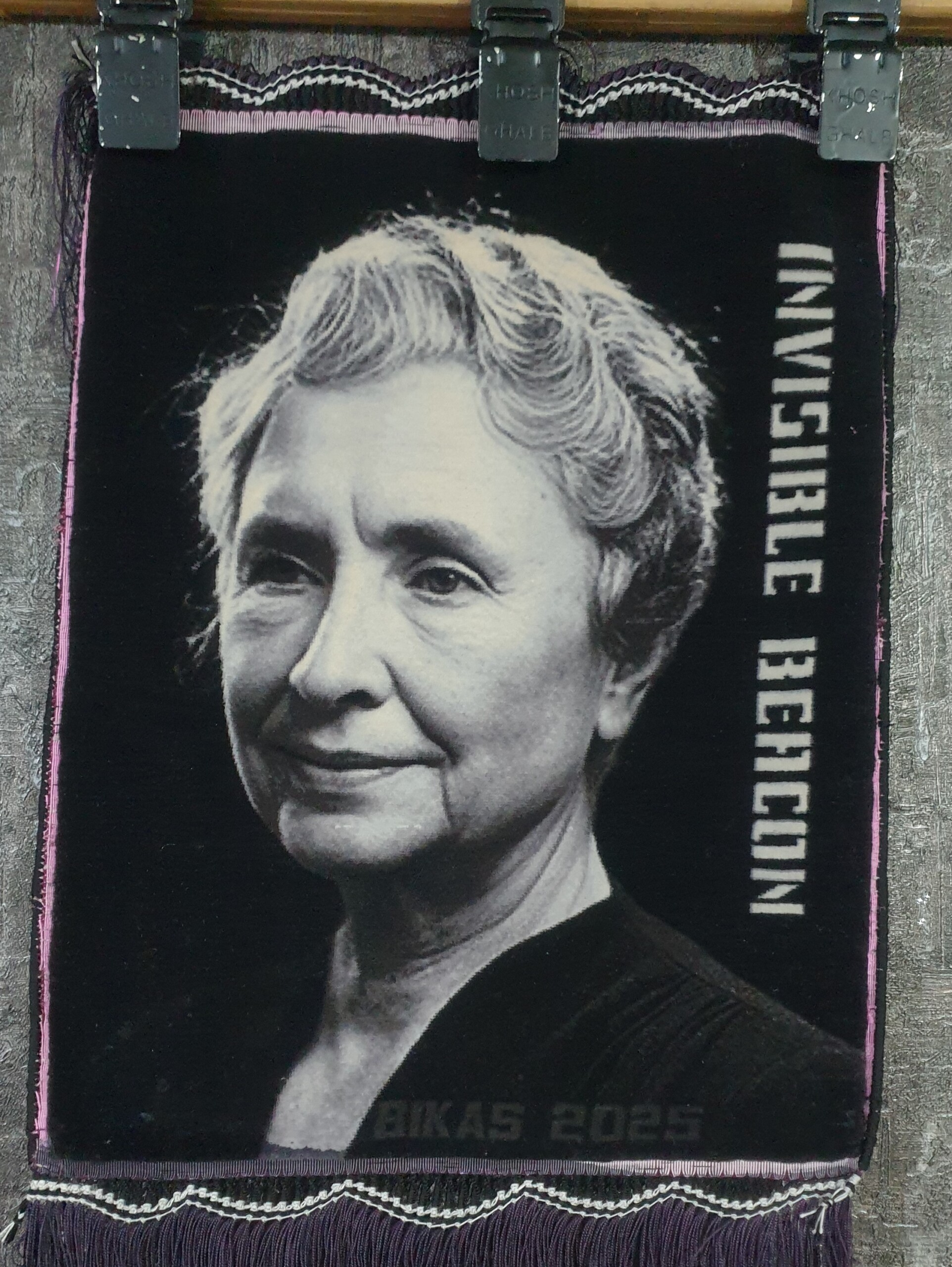
Keller’s influence also inspired Invisible Beacon, a handmade Persian portrait rug by conceptual artist Daniel Bikas. The work forms part of his 20 Portraits Collection which is part of Daniel Bikas Rugs, Collection 2024-2025. The book is available for free download at danielbikas.com, which portrays people whose ideas or achievements have influenced society.
Its title refers to Keller’s ability to reach people through her writing and activism despite being unable to see or hear. Created with traditional Persian rug-making techniques, the portrait connects craftsmanship with a modern story of education, equality and social change.
The artwork offers another way to consider Keller’s legacy: not as a simplified symbol of triumph over disability, but as an individual whose ideas continue to encourage wider conversations about human potential and inclusion.
Helen Keller’s greatest achievement was not that she learned to fit into an inaccessible world. It was that she gained the tools to participate in it—and then worked to make that world more accessible to others.