
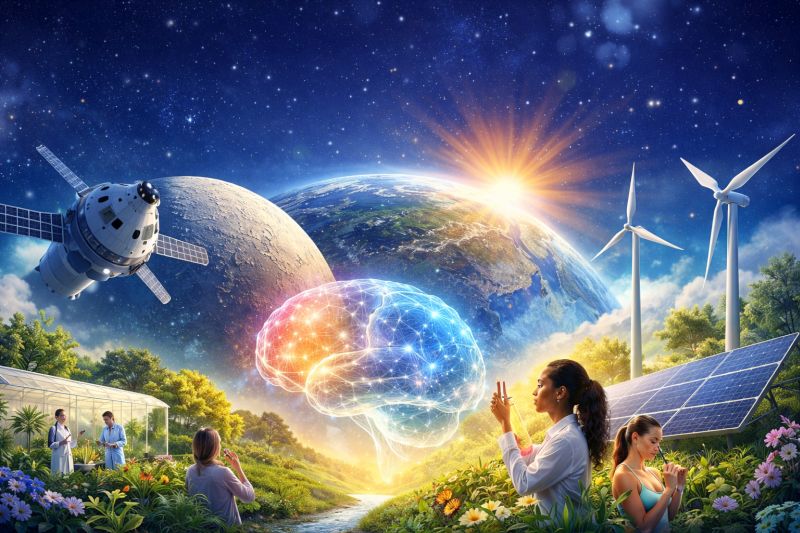

Not all progress makes headlines. Some of the most meaningful changes happen quietly—across laboratories, landscapes, and even beyond our planet, in missions that are redefining what’s possible.
This year, science is not just about breakthroughs. It’s about consistency, persistence, and small shifts that are starting to add up. From restoring ecosystems on Earth to preparing new paths to the Moon, these stories remind us that progress is happening—even if we don’t always notice it.
The Science Stories: News Worth Paying Attention To
Reaching Further: A New Step Toward the Moon
In a quiet but significant milestone—one of the standout moments in Science News April 2026—NASA continues to move forward with its Artemis program, this time focusing on a complex orbital path known as the “Orion loop” around the far side of the Moon.
This trajectory allows spacecraft to travel deeper into space while maintaining stability and efficiency—an important step for future human missions. It’s not about landing just yet. It’s about learning how to get there, safely and sustainably.
The mission builds on the success of Artemis I, which proved that long-distance lunar travel is possible without a crew on board.
What makes this moment powerful isn’t spectacle—it’s preparation. A reminder that exploration is not one giant leap, but a series of carefully calculated steps.
China’s Quiet Progress: Slowing Land Degradation
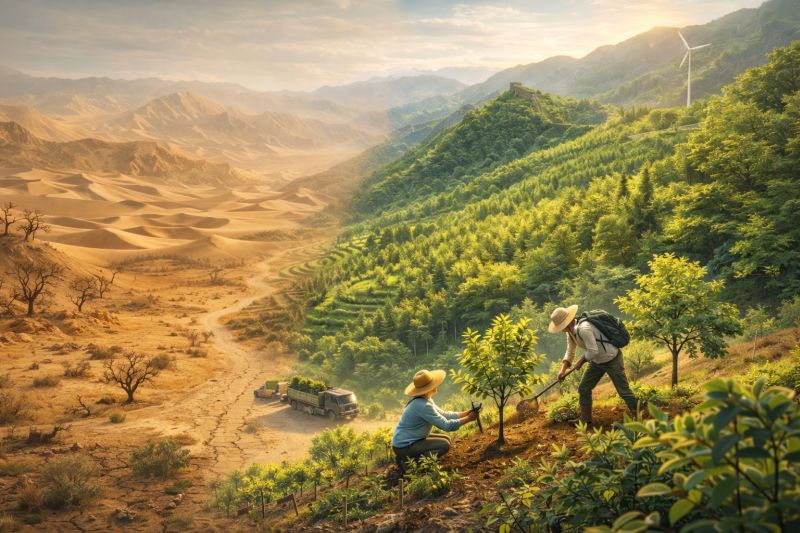
China’s fight against desertification is one of the largest environmental efforts in the world. The so-called “Great Green Wall,” launched in 1978, aims to create a vast forest barrier to slow the expansion of the Gobi Desert and restore damaged land. Over the decades, millions of hectares have been reforested, helping to stabilize soil, reduce sandstorms, and improve local ecosystems. Innovative approaches, such as combining solar farms with vegetation, are also helping to restore soil while producing renewable energy.
Satellite data even suggests that China has contributed significantly to global “greening” in recent years. Still, the project faces challenges, including water use, biodiversity concerns, and the long-term survival of planted trees. Even so, it remains a powerful example of how sustained effort can begin to reverse environmental damage.
A reminder that environmental progress is possible—when patience meets policy.
Small steps forward rarely stand alone. Across the world, similar efforts are gaining momentum.
Rethinking Adulthood: The Brain Takes Its Time
What if adulthood doesn’t begin at 18—or even 25—but much later?
A new study led by researchers at the University of Cambridge suggests that the human brain may not fully reach its adult form until around the age of 32. Based on brain scans from more than 4,000 people, scientists found that the “adolescent” phase lasts far longer than previously believed.
Behind the scenes, the brain is still rewiring—strengthening useful connections, pruning others, and becoming more efficient over time. These changes are not visible from the outside, but they play a crucial role in how we think, decide, and adapt.
The findings, published in Nature Communications, challenge long-held ideas about maturity and life stages.
Because growth doesn’t follow a deadline—it follows its own timeline.
Cleaning the Oceans, One System at a Time
What started as an ambitious idea is slowly becoming a real-world solution. Organizations like The Ocean Cleanup are now operating systems that actively remove plastic from oceans and rivers.
Instead of one dramatic breakthrough, progress here comes from iteration—improving technology, scaling operations, and focusing on the most polluted areas.
Progress doesn’t always come from reinventing everything—but from making existing ideas better.
Detecting Disease Earlier Than Ever Before
A shift is happening in healthcare—from treatment to prevention.
New diagnostic tools are making it possible to detect diseases like cancer earlier, often before symptoms appear. Supported by global initiatives connected to the World Health Organization, research is increasingly focused on accessibility as much as innovation.
Earlier detection means more options, better outcomes, and, ultimately, more lives saved.
A subtle shift—with life-changing consequences. Technology, too, is becoming more human-centered.
Read also: 2025 in Science: The Discoveries, Decisions, and People Who Shaped the Year
Mental Health Support That Meets You Where You Are
Mental health tools are evolving beyond one-size-fits-all advice. Platforms developed by companies like Headspace are using personalization to better support users—whether it’s improving sleep, managing stress, or preventing burnout.
These tools don’t replace professional care. But they make support more accessible, more immediate, and more integrated into daily life.
Sometimes innovation isn’t about complexity—but about connection.
Predicting Climate Risks Before They Happen
Artificial intelligence is no longer just a buzzword—it’s becoming a practical tool for climate resilience.
Organizations such as NASA are using AI to model extreme weather patterns with increasing accuracy. From floods to droughts, better predictions allow communities to prepare earlier and respond more effectively.
We may not be able to stop every disaster—but we can reduce the damage.
A quiet evolution in how we face global challenges.

Clean Energy, Scaling Faster Than Expected
Renewable energy is no longer a future goal—it’s becoming part of everyday reality.
Across the world, solar and wind power are expanding at a pace few predicted just a decade ago. New projects are being launched faster, costs continue to fall, and energy systems are gradually shifting toward more sustainable sources.
In many regions, solar energy is now among the cheapest forms of electricity. At the same time, advances in battery storage are making it easier to rely on renewables even when the sun isn’t shining or the wind isn’t blowing.
This isn’t driven by one breakthrough—but by continuous improvement, investment, and global commitment.
A steady transformation, quietly reshaping how the world is powered.
Together, these stories point to a different kind of progress—one based on persistence and long-term thinking. The future isn’t shaped in a single moment, but through many small, consistent steps.
Change doesn’t happen everywhere at the same pace, but it is happening. And often, the most meaningful progress is the kind that goes almost unnoticed.